

Walk into almost any new space, a cafe, an office, even a condo lobby, and you’ll probably see something that looks like wood. Planks on the floor. Beams across the ceiling. Slatted panels along the wall.
But here’s the thing, it usually isn’t wood. It’s a tile. Or vinyl. Or some kind of engineered board designed to do one thing, look like wood without being wood.
And that says a lot.
No other material gets copied this much. You don’t see porcelain imitations of brick. Or metal trying to look like stone. But wood? Everyone wants it, even when they can’t have it.
Let’s talk about why.
Wood Looks Right, Feels Right
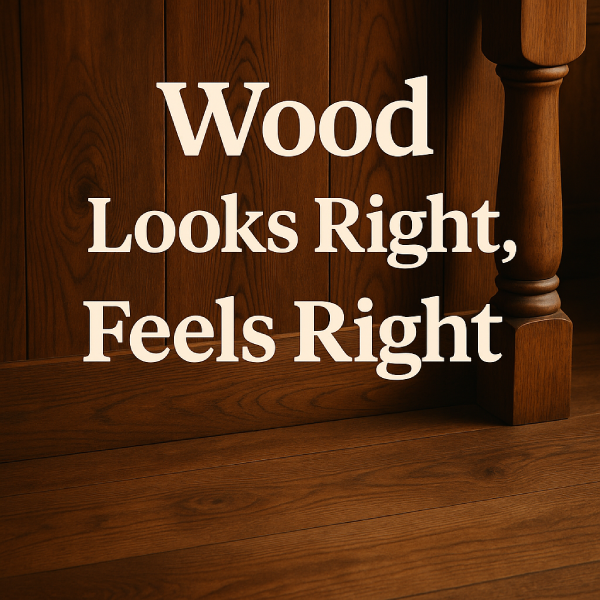
There’s a warmth to wood that no other material pulls off; it softens a hard space. It adds rhythm to a room. Even the imperfections, the knots, the uneven grain, make it feel more grounded, more human.
That’s not marketing fluff. That’s how people react. Whether it’s a barn door in a studio apartment or a walnut shelf in a clean-lined kitchen, wood makes a space feel lived in, not staged. Not sterile. Real.
And that emotional pull doesn’t go away just because real wood isn’t practical.
Related: What Is Modified Wood? Benefits, Drawbacks, and Uses Explained
So, Why Not Just Use Real Wood?
Because sometimes, it’s a headache.
Wood shifts with the seasons. It reacts to moisture. It scratches. It needs finishing or refinishing. And depending on where you live or what species you want, it might not be the most sustainable or affordable option.
You can’t put soft pine floors in a busy cafe and expect them to hold up. You wouldn’t clad a high-rise in solid cedar unless you’ve got a serious maintenance plan.
So people do what they’ve always done: they find a workaround.
Enter the copycats.
The Rise of “Materials for Wood”
We don’t call them fakes anymore. We call them wood-look materials, engineered alternatives, and low-maintenance solutions. But let’s be honest, they’re all designed to pull the same trick, look like wood, but behave better.
Here are the most common ones:
- Porcelain or Ceramic Tile: Printed to mimic everything from white oak to charred timber. Great for bathrooms, kitchens, anywhere water’s an issue.
- Luxury Vinyl Plank (LVP): Comes in all kinds of finishes, textured to feel like the real thing. Easy to install. Built to take a beating.
- Fiber Cement Siding: You see this on exteriors everywhere. It holds up against weather, pests, fire, you name it, and still looks like traditional lap siding.
- Thermally Modified Wood: Technically still wood, just cooked and cooled in a way that stabilizes it. Doesn’t warp or rot like untreated lumber.
- Metal Panels with Woodgrain Wraps: Big in commercial builds. Aluminum or steel, wrapped to look like cedar or teak from afar.
- Laminate and MDF Veneers: Often used in cabinetry and millwork. Affordable, consistent, and finished to look like high-end hardwoods.
These are the go-to materials for wood when budgets, conditions, or codes say no to the real thing.
Related: Wildland Urban Interface Explained: Risks, Challenges, and Safety Tips for Homeowners
Why Wood Gets a Pass, Even When It’s Not There
Let’s not pretend people can’t tell the difference. Most of the time, they can. But they don’t care.
Because what people want isn’t wood. They want what it does to a room.
The grain gives texture. The tone adds calm. The look reminds us of older homes, slower places, things made by hand. Even if the material is engineered or pressed or printed, if it carries some of that feeling? That’s enough.
That’s why architects and designers still reach for these lookalike materials. It’s not laziness. It’s an adaptation.
The Spaces Where Real Wood Still Wins
All that said, there are moments when nothing else will do.
- A custom staircase with hand-finished railings
- Ceiling beams in an old church conversion
- A feature wall that needs real depth, not a print
In these moments, the weight, the touch, and the aging of real wood matter. Because the goal isn’t just to look warm, it’s to feel alive. Real wood does that. Imitations don’t.
So, it’s not about choosing one or the other. It’s about knowing where to spend, where to fake, and where to blend.
Smart design is about balance, not purity.
Where Wood Imitations Outperform the Real Thing
Now flip it. There are spaces where real wood would fail fast.
- A hotel bathroom? Go porcelain.
- A retail space with heavy food traffic? Use vinyl.
- Exterior siding in a rainy coastal city? Fiber cement every time.
These materials were made for performance. They don’t swell, splinter, fade, or fuss. They clean up easily. They last. And in the right light, they do a da,n good impression of the real thing.
For architects and builders, that’s often a better bet.
Related: What Are Rainscreen Cladding Systems and How Do They Work?
Final Thought: Everyone’s Chasing Wood for a Reason
There’s a reason every material wants to look like wood, and not the other way around.
Wood has range. History. Soul. It’s been part of our spaces for centuries, and it still shows up today, even when it’s not really there.
So, whether you’re walking on it, leaning against it, or admiring a well-done fake, wood is in the story.
And that’s not changing anytime soon.
Frequently Asked Questions
Tiles, vinyl planks, fiber cement, metal panels, and laminates are all made to look like wood but behave differently, usually more durable or weather-resistant.
Because real wood isn’t always practical. It scratches, shifts, and needs maintenance. Lookalikes give the same warmth without the upkeep.
Depends on the use. Real wood brings character and depth. Engineered alternatives win on durability, consistency, and cost, especially in high-traffic or wet areas.
