
There’s good design. And then there’s the kind that makes you stop.
The kind that pulls you in before you even realize what you’re looking at.
That’s the kind of charred wood interior design Yaroslav Galant is known for, bold, refined, and quietly unforgettable.
Forget filler and flash, his work is built around raw materials, bold contrasts, and a level of restraint that’s rare in luxury design. At the center of it all? Charred wood. Blackened, textured, unapologetically dramatic, and somehow still elegant.
This blog will tell you about how Galant uses one of the oldest techniques in the world to create spaces that are entirely modern, and why jaw-dropping design doesn’t have to be loud to be unforgettable.
What Is Charred Wood, and Why Is It So Striking?
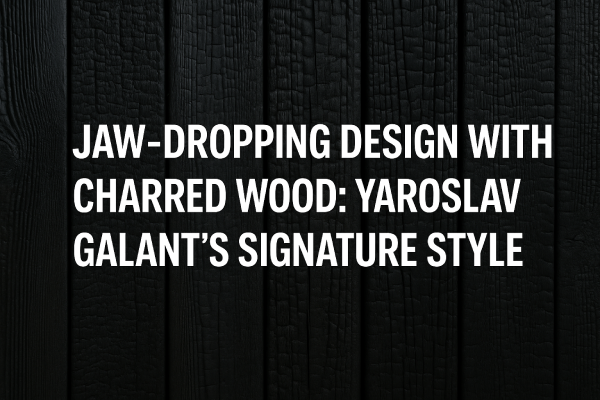
Charred wood design, also known as cladded Shou Sugi Ban, is a technique where wood is intentionally burned on the surface to create a deep, dark texture. It’s not new. In fact, it dates back to 18th-century Japan, where it was used to protect wood from rot, fire, and pests.
Today, it’s developed into a high-end design choice.
It has a unique surface: matte black, cracked, and richly detailed. It feels ancient but looks modern. That’s the magic Galant taps into, bringing something primal into clean, minimalist spaces.
Why does charred wood work so well in design?
- Deeply textured but not busy.
- Adds contrast without clutter.
- Draws the eye and holds it.
How Yaroslav Galant Uses Charred Wood in Interior Design
You’ll never see a room completely covered in charred wood in Galant’s work. And that’s the point.
He uses it sparingly but intentionally. It shows up in:
- Floating feature walls that create depth
- Custom cabinetry with sculptural impact
- Architectural stairs and built-ins
- Statement furniture that anchors a room
This isn’t about flooding a space. It’s about balance. Galant’s dropping design comes from knowing exactly how much to use and where to stop.
Related: Why Wood Is the Most Imitated Building Material in Architecture and Design
A Design Language That Doesn’t Follow Trends
Galant’s interiors aren’t trying to “look current”. They feel timeless.
Instead of trend-driven decor, he leans into materials that hold stories. Wood that’s been blackened by fire. Stone that’s rough-cut and raw. Concrete left bare.
In a world obsessed with glossy finishes, Galant’s use of charred wood is a reminder that texture, history, and simplicity still move people. That’s what makes it a jaw-dropping design; it doesn’t shout, but it echoes.
Why Charred Wood Design Is More Than Just a Mood
Designers love it. Builders swear by it. But why is charred wood such a smart choice?
Because it doesn’t just look good. It performs.
Benefits of Charred Wood:
- Naturally weather- and pest-resistant
- Fire-retardant (ironic, but true)
- Long-lasting with very little maintenance
- Sustainable, especially when reclaimed
This makes it best for both residential and commercial spaces, especially if you’re designing for longevity, not just looks.
Minimalism With an Edge
Minimalist design often risks feeling sterile. Charred wood fixes that.
Its cracked finish adds soul. Its matte surface catches light in ways polished wood can’t. And when paired with softer textures, linen, leather, and stone, it creates that rare thing, a space that feels both bold and calm.
This is where Galant’s work really stands out.
It’s minimalism, but not the cold kind.
It’s a dropping design, but without the drama.
Related: What is the Japanese wood burn technique?
What Sets Galant Apart?
There are plenty of designers who use charred wood. But here’s what makes Yaroslav Galant different:
- He doesn’t decorate, he sculpts. Every detail has weight.
- He knows when to stop. Negative space is part of the design.
- He respects material history. Nothing is used just because it’s trendy.
- He designs for emotion. His spaces make you feel something, not just admire them.
Galant’s designs are not about impressing others. They’re about connecting with the people who live in them.
Want This Look Without a Full Remodel?
You don’t need a high-end architecture team to bring this aesthetic into your own space. Start small.
How to Add Charred Wood Touches:
- A floating shelf in blackened oak
- Framed charred wood art panels
- A small accent wall behind a reading nook
- Side tables or cabinetry with charred fronts
The trick is letting the wood breathe. Don’t pair it with shiny finishes. Let the texture do the talking.
Related: What is Thermally Modified Wood? Uses, Benefits, Pros And Cons Explained
Frequently Asked Questions
Designers often use charred wood as accent walls, stair treads, or custom cabinetry to add depth and texture to minimalist interiors.
Yes. Once it’s sealed properly, it’s stable, odorless, and safe.
Only if overused. Use it as an accent, and pair it with lighter tones to keep things balanced.
You can, but it takes practice (and safety gear). Buying pre-charred panels is a smart place to start.
No. This technique has been around for centuries, and the way Galant uses it, it’s timeless.
Final Thought: Beauty, Burnt It
Not every space needs a statement wall. But if you’re going to make one, make it count.
Yaroslav Galant’s use of charred wood isn’t about making a scene. It’s about telling a story. One that’s rooted in craftsmanship, contrast, and quiet power. One that leaves a mark.
If you’re chasing a dropping design that doesn’t look like everyone else’s Pinterest board, this is where you start.
Let the wood burn. Let it speak. Let it stand on its own.
Related: What Is Modified Wood? Benefits, Drawbacks, and Uses Explained
